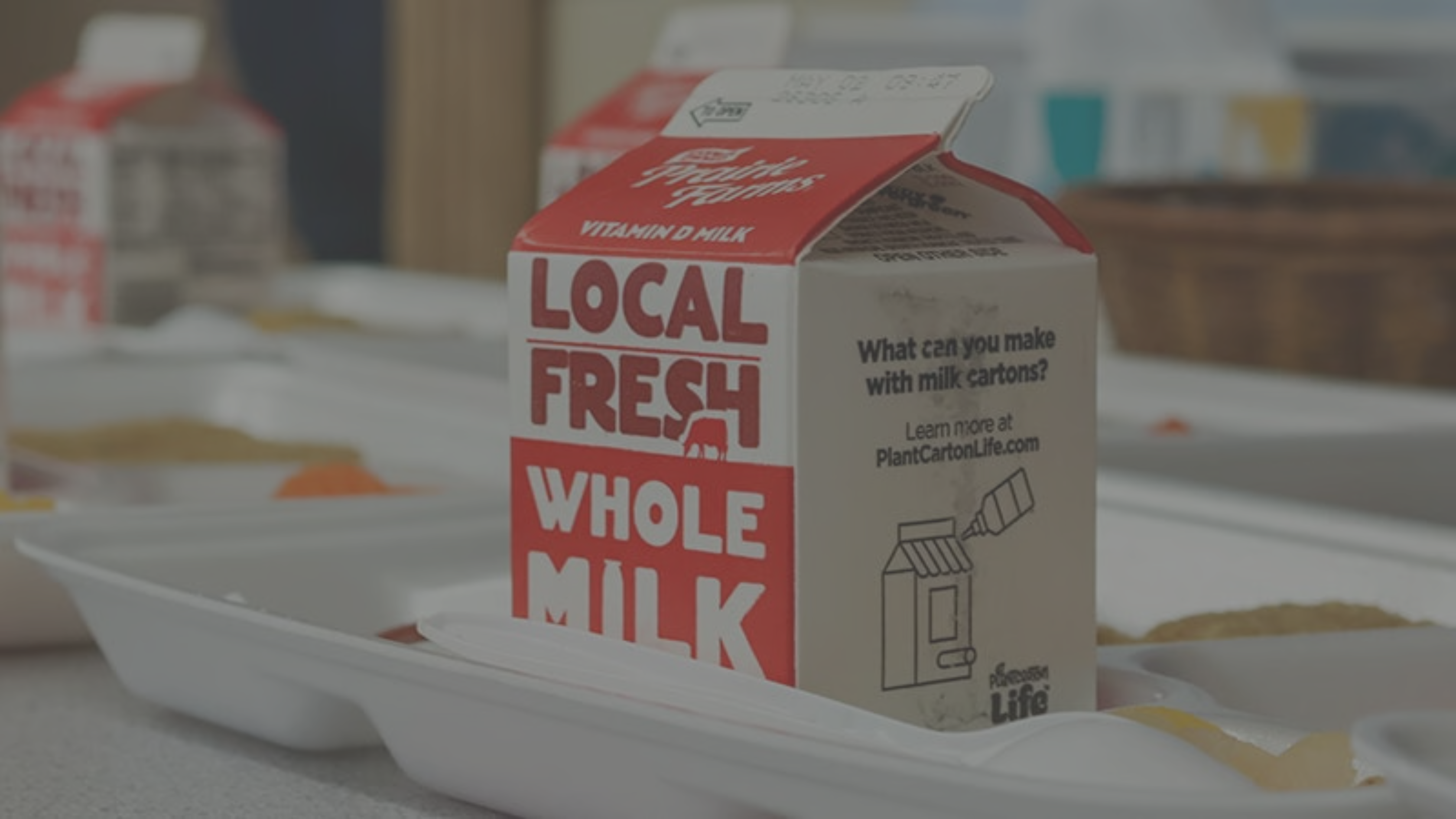
On January 14th, President Trump signed the Whole Milk for Healthy Kids Act, re-instituting whole and reduced-fat milk into the school lunch and breakfast programs. The bill has been years in the making, and dairy groups welcomed its passage.
According to the School Nutrition Association, the school lunch program serves approximately 4.9 billion meals annually, while the school breakfast program serves 2.5 billion meals, for a total of 7.4 billion meals delivered to US schoolchildren each year. Most meals are served with a half-pint of milk, which is required under the program. This equates to roughly 3.5–4.0 billion pounds of milk, or about 9.4% of total US fluid milk sales in 2024.
The key question is how much additional milkfat could move through the system because of this legislation. While an exact figure is difficult to forecast, sensitivity analysis provides some parameters. If one assumes that all milk currently consumed at school is skim, and that students shift toward whole and reduced-fat milk at the same rate as fluid milk sales (approximately 40% whole milk and 37% reduced-fat milk), the program would require an additional 85.1 million pounds of butterfat, equivalent to roughly 104 million pounds of butter.
At the lower end, if just 10% converts to 2% milk and 10% to whole milk, this is an incremental 21.9 million pounds of butterfat. In a fat-heavy market, like the current conditions, this equates to just 0.2% of total fat pounds, which is marginal.
Currently, school milk is low-fat or skim, with at least two-thirds of children opting for flavored milk, according to estimates from the International Dairy Foods Association. Most flavored milk is skim, and because students prefer it, the impact on butterfat is likely to fall toward the lower end of the estimated values above, unless schools offer whole- or reduced-fat flavored milk.
Cost considerations further temper expectations. Whole and reduced-fat milk are more expensive than skim and low-fat varieties, and schools may be reluctant to absorb the higher costs. As a result, many districts may continue their current purchasing patterns, despite the regulatory change.
The pull of school milk could lead to supply constraints if cream markets tighten or the dairy industry contracts significantly. Under those conditions, butter prices would also rise, potentially pushing costs beyond what schools are willing or able to pay. In that scenario, substitution back toward skim and low-fat milk would likely limit any sustained increase in butterfat demand.